
Key Takeaways
- Each Azure region runs multiple instances of the connectivity platform components instead of a single instance.
- Every service unit operates independently, so if one instance fails, the others continue running without affecting the entire service.
- The architecture is designed to prevent one failure from bringing down the whole platform.
- Multiple instances allow the service to easily scale out as new users sign in and usage grows.
Resilient Connectivity Architecture with Multiple Service Instances in Azure! This architecture helps IT administrators by providing a more reliable and scalable connectivity platform for cloud services. Because multiple service instances run independently within each region, the platform can continue operating even if one component fails. This reduces service disruptions and ensures that users can still access their sessions without major downtime.
Table of Content
Table of Contents
Resilient Connectivity Architecture with Multiple Service Instances in Azure
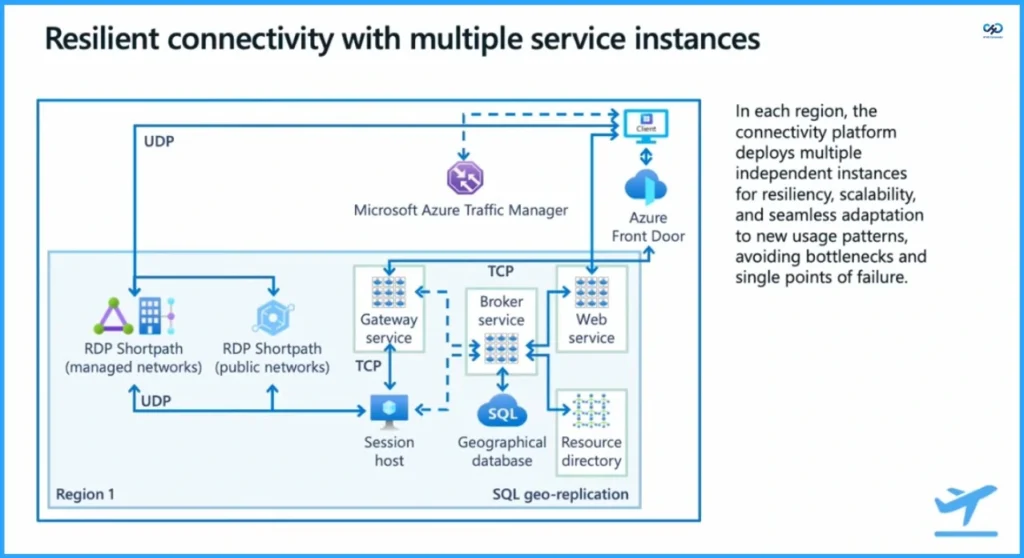
Microsoft designs a resilient and scalable connectivity platform to ensure reliable access to cloud services such as Azure Virtual Desktop or Cloud PC. Instead of relying on a single service instance, multiple independent instances of each service are deployed within an Azure region.
It also helps IT admins manage growing user demand more easily. Since the platform can scale by adding more service instances, administrators do not need to worry about performance issues when new users sign in or when usage increases. The system automatically handles higher workloads while maintaining stable performance.
- In addition, the platform runs across many Azure regions globally, which improves connectivity for users in different locations.
- This means users can connect to the nearest region with better performance and lower latency.
- For IT administrators, this results in fewer connectivity issues, improved user experience, and easier management of remote desktops or cloud PCs.
| Resilient connectivity with multiple service instances |
|---|
| In each region, the connectivity platform deploys multiple independent instances for resiliency, scalability, and seamless adaptation to new usage patterns, avoiding bottlenecks and single points of failure. |
- How to Configure New Windows App Settings for Windows 365 using Intune
- Explore the Windows 365 Cloud PC Overview Reports in Intune
- Seamless Provisioning of Windows 365 Cloud PCs for External Identities with Intune
- Cloud PC Zero to Hero Journey DaaS solution Windows 365
Microsoft Technical Takeoff – Building Resilient Connectivity Architecture with Multiple Service Instances in Azure
The session “Resilient Connectivity Architecture with Multiple Service Instances in Azure” was presented during the Microsoft Technical Takeoff by Tom Hickling. In this session, the speaker explained how Microsoft designs the connectivity platform to ensure high resiliency and scalability for cloud services.

Instead of relying on a single service instance, multiple instances of each component are deployed within every Azure region. These instances operate independently so that if one instance fails, the others continue functioning without disrupting the overall service.
Need Further Assistance or Have Technical Questions?
Join the LinkedIn Page and Telegram group to get the latest step-by-step guides and news updates. Join our Meetup Page to participate in User group meetings. Also, join the WhatsApp Community and the Whatsapp channel to get the latest news on Microsoft Technologies. We are there on Reddit as well.
Author
Anoop C Nair has been Microsoft MVP for 10 consecutive years from 2015 onwards. He is a Workplace Solution Architect with more than 22+ years of experience in Workplace technologies. He is a Blogger, Speaker, and Local User Group Community leader. His primary focus is on Device Management technologies like SCCM and Intune. He writes about technologies like Intune, SCCM, Windows, Cloud PC, Windows, Entra, Microsoft Security, Career, etc.