
Enable Lock Screen Control Center on iOS using Intune Device Restrictions Policy! The setting controls whether the Control Center can be accessed while the device is on the Lock Screen. When set to false, it blocks users from swiping down or up, depending on the iOS version to open Control Center without unlocking the device first.
This helps organisations maintain strong control over device access. Control Center has buttons for things like Wi-Fi, Bluetooth, Airplane Mode, and the Camera. If these buttons are available on the Lock Screen, anyone can change those settings without unlocking the phone.
For example, someone could turn off Wi-Fi or Bluetooth even if they don’t know the passcode. By disabling Control Center on the Lock Screen, only the person who unlocks the device can change these settings. This keeps the device safer and prevents unwanted changes.
This feature has been available since iOS 7, so it works on all new Apple devices. No matter the iOS version, if the setting is false, the Control Center will not appear on the Lock Screen. The setting also works for User Enrollment (BYOD). The companies can apply this restriction on employees’ personal devices without affecting personal data. It only controls whether Control Center can be opened from the Lock Screen.

Table of Contents
Enable Lock-Screen Control Center on iOS using Intune Device Restrictions Policy
This policy helps IT admins and organizations by preventing unauthorised or accidental changes to important settings like Wi-Fi, Bluetooth, and Airplane Mode from the Lock Screen. By blocking Control Center access until the device is unlocked, it ensures the device always stays connected, allowing IT teams to track, lock, or wipe it remotely if needed.
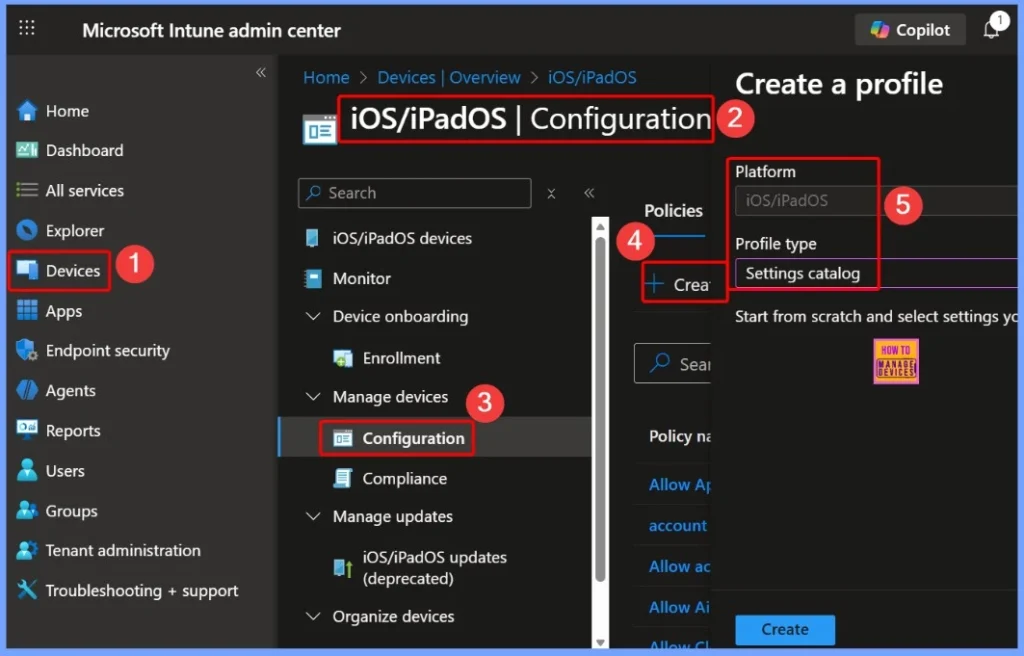
- Open Intune Admin Center.
- Go to Devices.
- Select Configuration.
- Click Create and select New policy.
- Choose Windows 10 and later as the platform.
- Select Settings Catalog as the profile type.
- Click Create to start building the policy.
- Enable Windows Cross Device Participation to Seamlessly Share Content using Intune
- Turn off App Notifications On The Lock Screen Policy using Intune
- Turn On Virtualization Based Security Policy using Intune
- Support Device Authentication Using Certificate Policy Intune
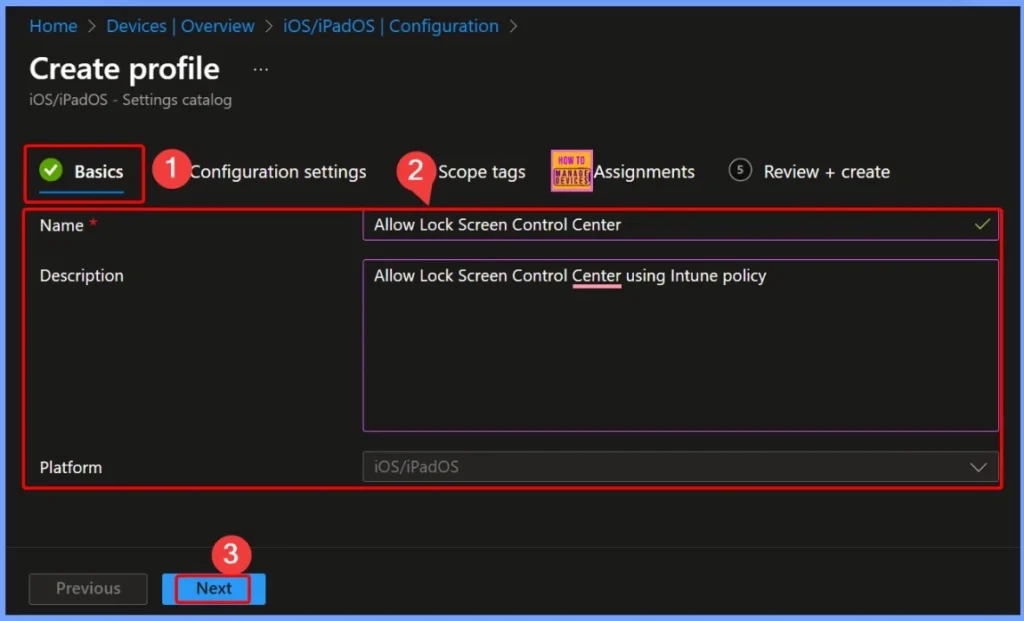
Basics Tab Helps you Define the Core Details of the Policy
The Basics tab helps you define the core details of the policy you are creating, where you can specify the Name, Description, and select the Platform. In this case, you need to fill in the details with the policy name “Allow Lock Screen Control Center”, along with a description that explains its purpose.
This policy also reduces user mistakes, as employees cannot accidentally disable key services that might impact corporate access or app functionality. In BYOD scenarios, the policy adds a layer of security without compromising personal data, giving organisations greater control while preserving user privacy.
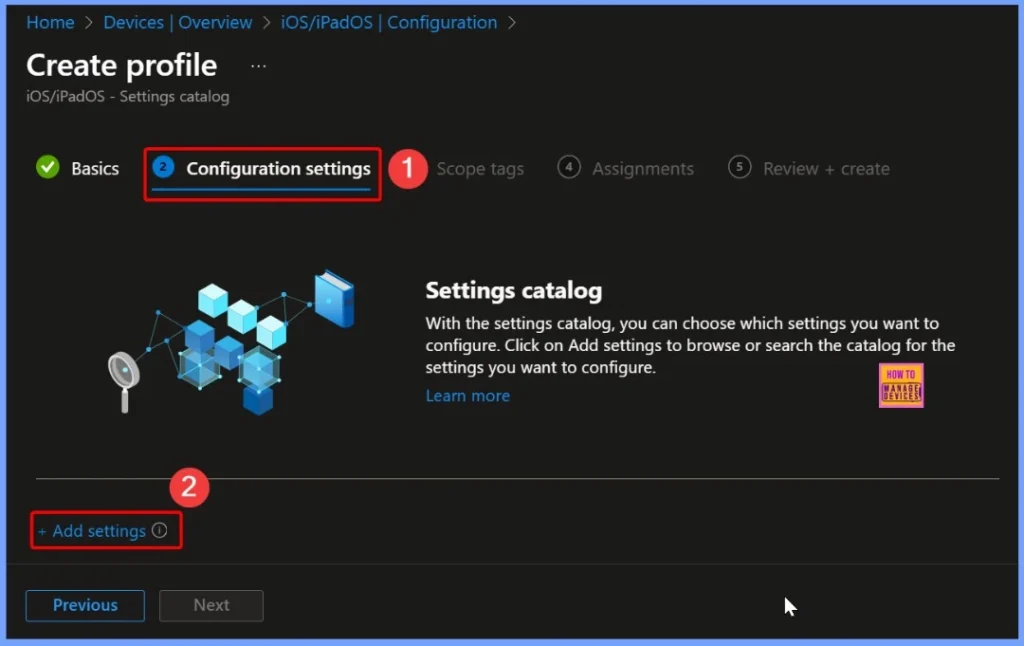
- Select the +Add settings hyperlink from the Configuration settings window.
Selecting the Lock Screen Control Center Setting – Intune Restrictions
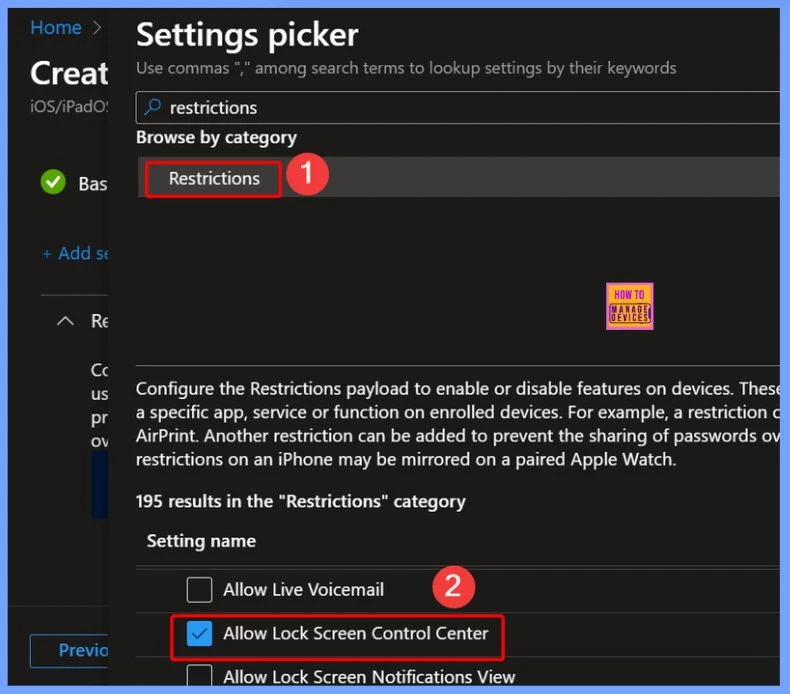
In the settings picker, type Restrictions in the search bar, and you’ll see around 195 results under this category. From this list, locate and select the Allow Lock Screen Control Center option. This is the specific setting required to manage whether users can access the Control Center from the Lock Screen on iOS/iPadOS devices.
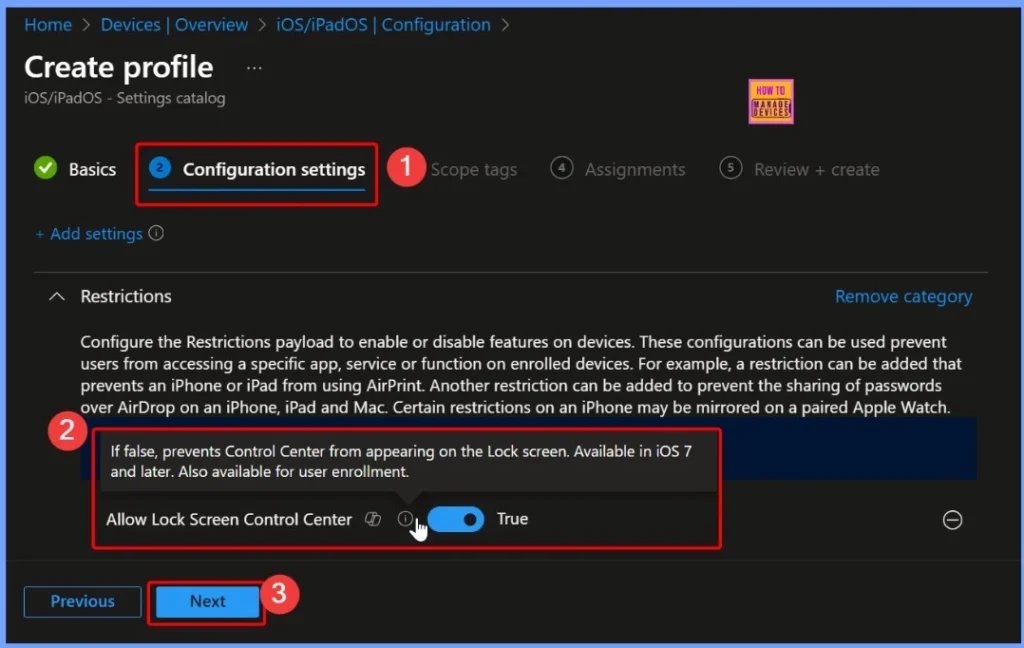
Default Behavior of the Lock Screen Control Center Setting
The Allow Lock Screen Control Center option is set to True by default. This means users can access the Control Center directly from the Lock Screen unless an administrator changes this setting. If organizations want to prevent unauthorized access or enhance device security, they can switch this value to False to block Control Center access until the device is unlocked.
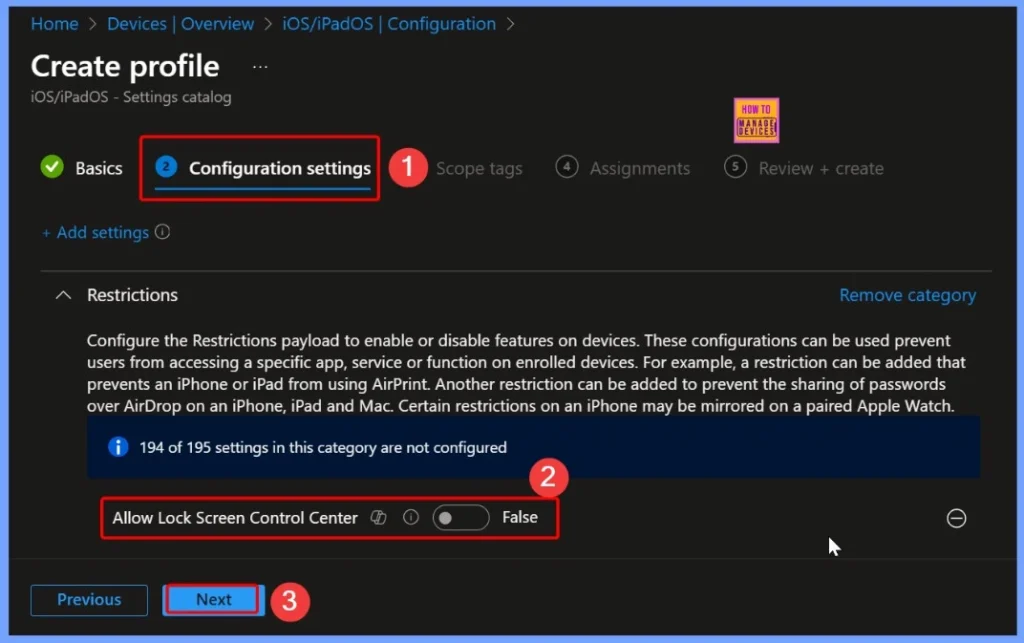
Configuring the Lock Screen Control Center Setting to False
In this step, you set the Allow Lock Screen Control Center option to False. This change ensures that users cannot open the Control Center from the Lock Screen, adding an extra layer of security. By enforcing this restriction, only authenticated users who unlock the device can access quick toggles like Wi-Fi, Bluetooth, or Camera, helping organizations maintain tighter control over device usage.
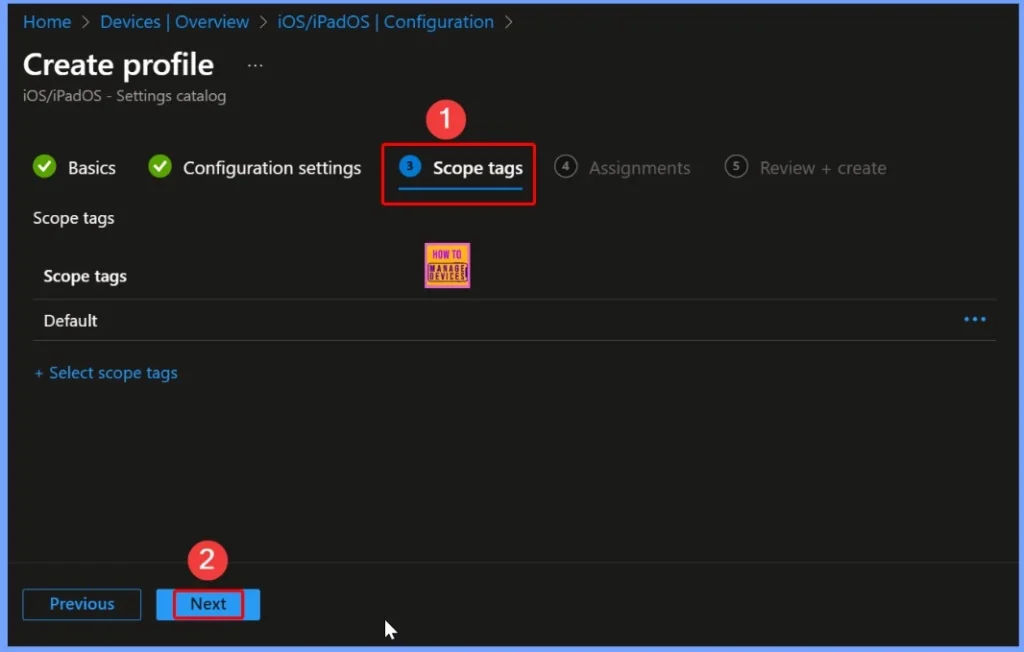
Assigning Scope Tags to the Lock Screen Control Center Setting
The Scope Tag option for the Allow Lock Screen Control Center setting allows organizations to control visibility and access to this policy within Intune. By applying a scope tag, only admins who belong to the associated roles or groups can view, edit, or manage this configuration.
Assigning the Lock Screen Control Center Policy
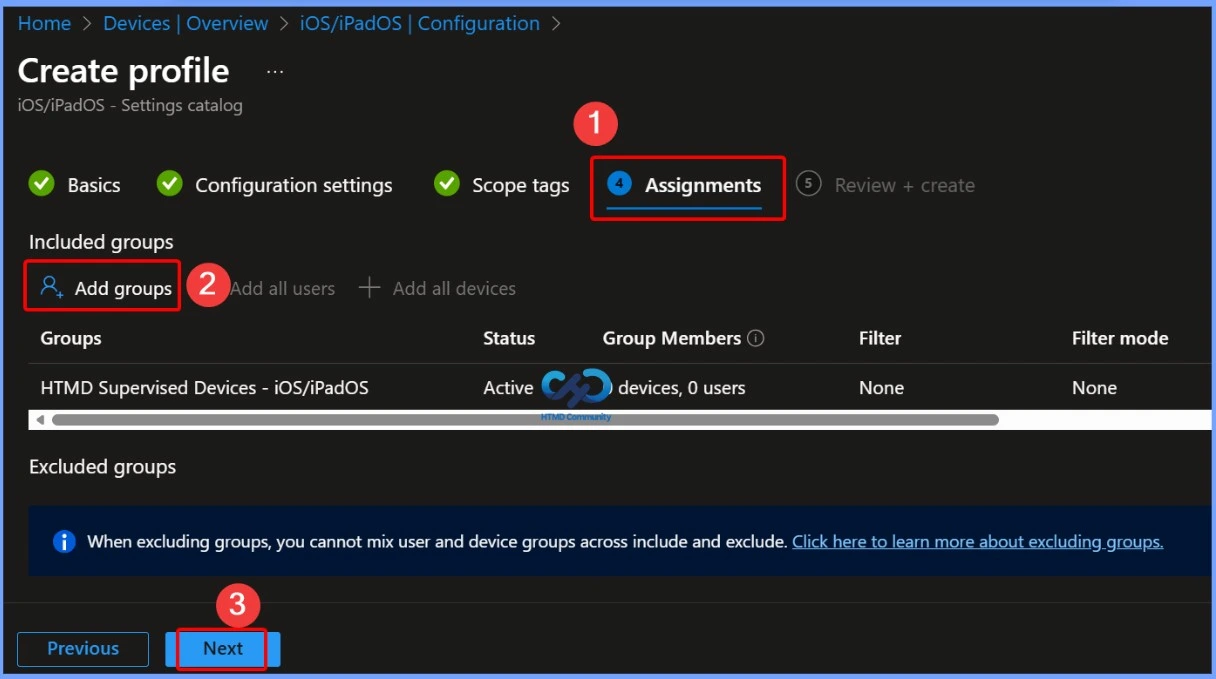
In the Assignments section, you choose which device groups that is HTMD supervised devices will receive the Allow Lock Screen Control Center setting. By targeting specific groups such as corporate iPhones, frontline users, or security-sensitive departments you ensure the restriction is applied only where needed.
Reviewing and Creating the Lock Screen Control Center Policy
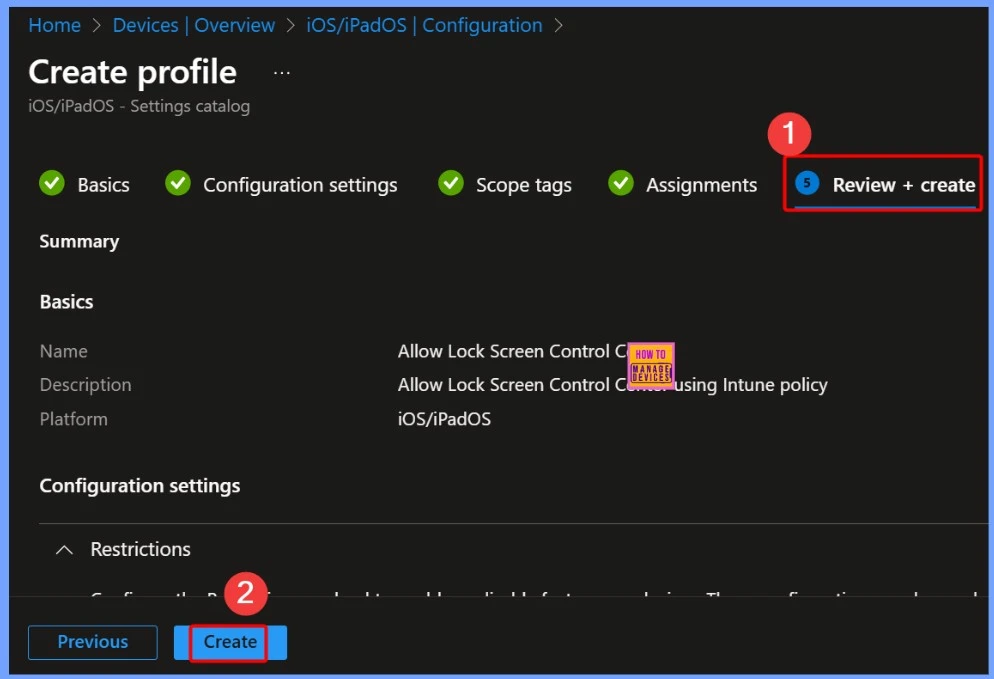
In the Review + Create step, Intune displays a summary of all the settings you configured for the Allow Lock Screen Control Center option. This includes the platform, profile type, selected restriction, scope tags, and assignments.
Verifying Device and User Check-In Status for the Policy
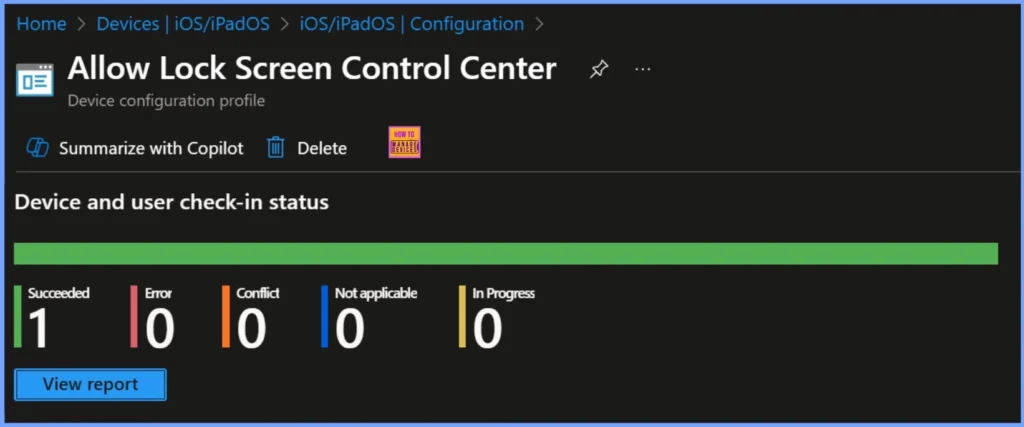
In the Device and User Check-In Status section for the Allow Lock Screen Control Center policy, you can see the deployment results. The status shows Succeeded: 1, meaning one device or user has successfully received and applied the policy.
Need Further Assistance or Have Technical Questions?
Join the LinkedIn Page and Telegram group to get the step-by-step guides and news updates. Join our Meetup Page to participate in User group meetings. Also, Join the WhatsApp Community to get the latest news on Microsoft Technologies. We are there on Reddit as well.
Author
Anoop C Nair has been Microsoft MVP for 10 consecutive years from 2015 onwards. He is a Workplace Solution Architect with more than 22+ years of experience in Workplace technologies. He is a Blogger, Speaker, and Local User Group Community leader. His primary focus is on Device Management technologies like SCCM and Intune. He writes about technologies like Intune, SCCM, Windows, Cloud PC, Windows, Entra, Microsoft Security, Career, etc