
Let’s discuss Disable Mapping of Client Drive Redirection in Remote Desktop Services Sessions using Intune. This policy setting prevents users from sharing the local drives on their client computers to Remote Desktop Servers that they access. Mapped drives appear in the session folder tree in Windows Explorer.
The reason is that, data could be forwarded from the user’s Remote Desktop Services session to the user’s
local computer without any direct user interaction. Malicious software already present on a compromised server would have direct and stealthy disk access to the user’s local computer during the Remote Desktop session.
By impact, Drive redirection will not be possible. In most situations, traditional network drive mapping to file shares (including administrative shares) performed manually by the connected user will serve as a capable substitute to still allow file transfers when needed.
Enabling the policy prevents a user from accidentally or maliciously copying sensitive company data (e.g., customer lists, financial reports) from the secured remote session/server down to their less-secure local device (which might be a personal computer).

Table of Contents
Disable Mapping of Client Drive Redirection in Remote Desktop Services Sessions using Intune
In a scenario where a Remote Desktop Session Host is compromised, disabling drive redirection limits the attacker’s ability to exfiltrate data from the remote environment to a connected client or access local client drives.
- How to Set Deadline for Automatic Installation of Quality Updates on Windows Devices using Intune
- How to Track Windows Security Patch Installation Details using Intune Inventory
- How to Stop Automatic Driver Installation in Windows11
How to Start Policy Creation on Intune Portal
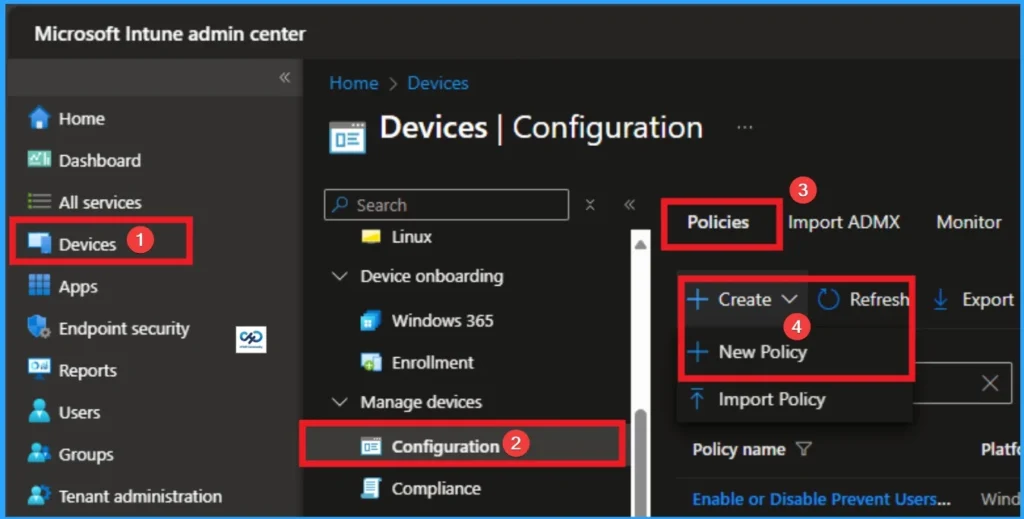
You can start the policy creation of the Block Personal MSAs Policy in Intune. Using simple steps, you can easily complete the policy creation. Open the Intune admin center. Go to Devices > Configuration > Policies> + Create > + New policy.
Profile Creation
After that, you will get a profile window to select the platform and profile type. First of all, you select the platform, then you can select the profile type. Select Windows 10 and later as the platform, and select settings catalog as the profile type. Click on the create button.

Basic Tab for Adding Name and Description
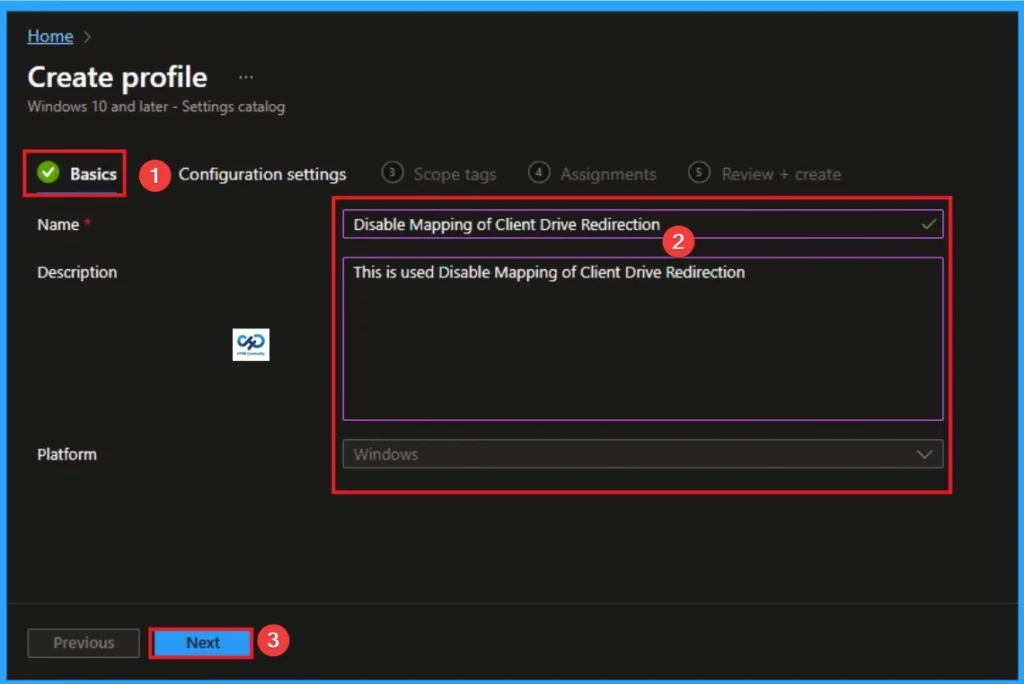
The basic tab is starting step of policy creation. On this tab, you have to give a name for the policy that you want to create. The name field is mandatory. Without giving a name, you can’t create a policy on the basic tab. You can also describe the policy, which description is not compulsory. Click on the next button.
Configuration Settings
The configuration tab allows you to select specific policy settings to manage your organisation’s devices. On this page, we click on the + Add Settings hyperlink. Then you will get a settings picker that will show different types of categories to select specific settings. Here, I choose Administrative Templates\Windows Components\Remote Desktop Services\Remote Desktop Session Host\Device and Resource Redirection\Do not allow drive redirection.
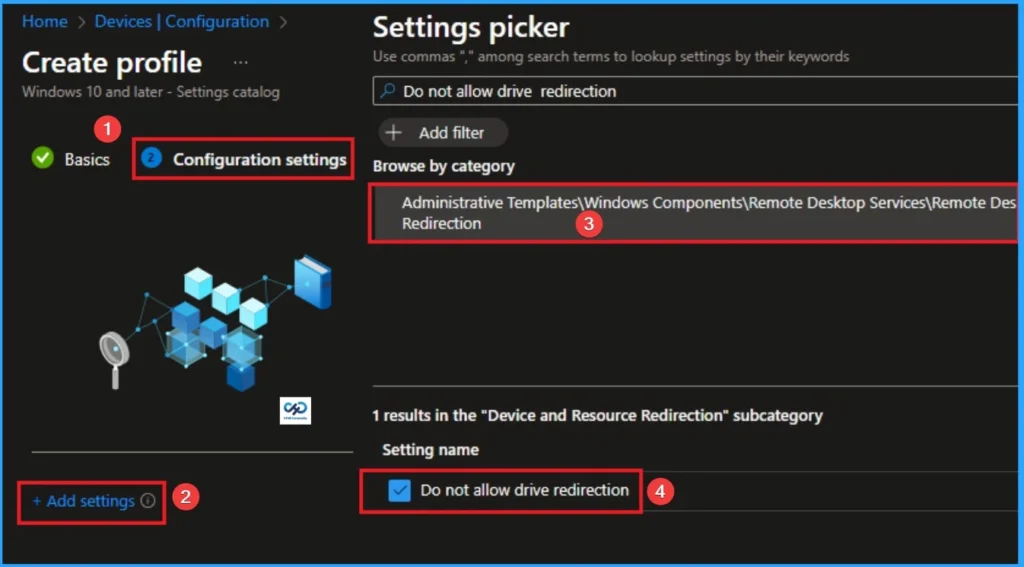
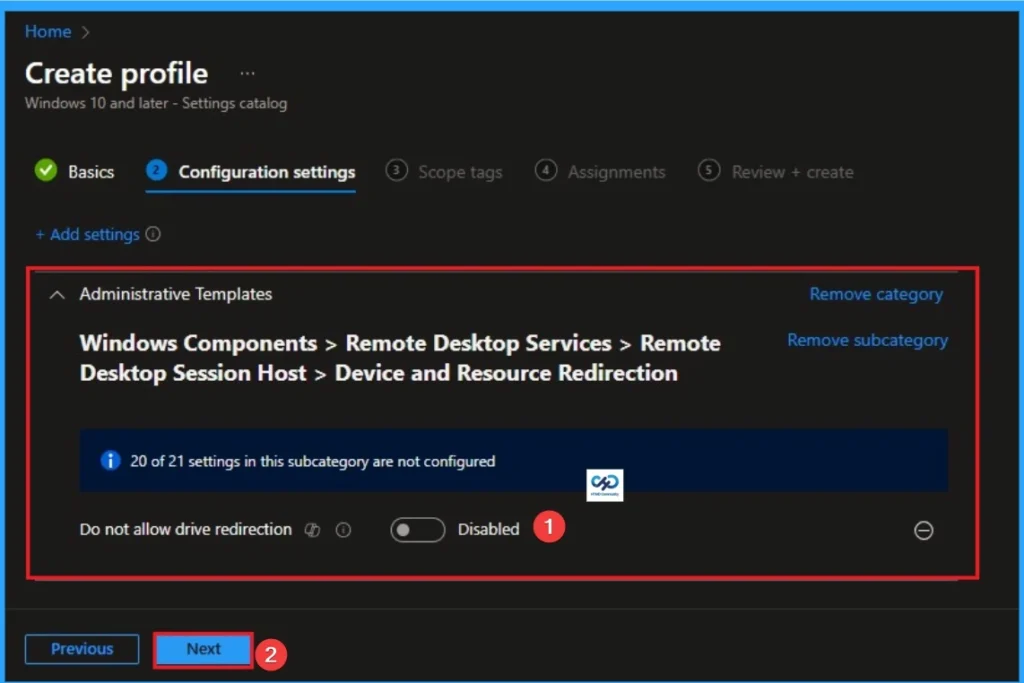
Disable Client Drive Redirection
t prevents a user from easily copying malicious files or malware residing on their local machine up into the secured server/virtual desktop environment. Click on the Next button.
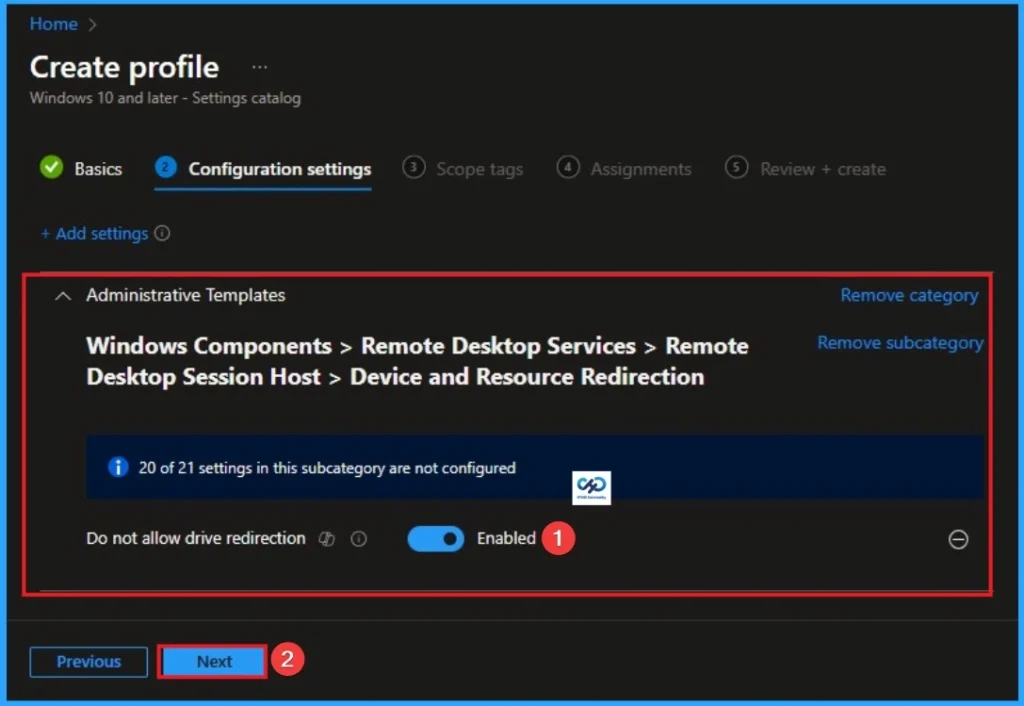
Enable Client Drive Redirection
To comply with data privacy regulations (like GDPR or HIPAA), the company enforces a “no data on the endpoint” rule. Click on the Next button.
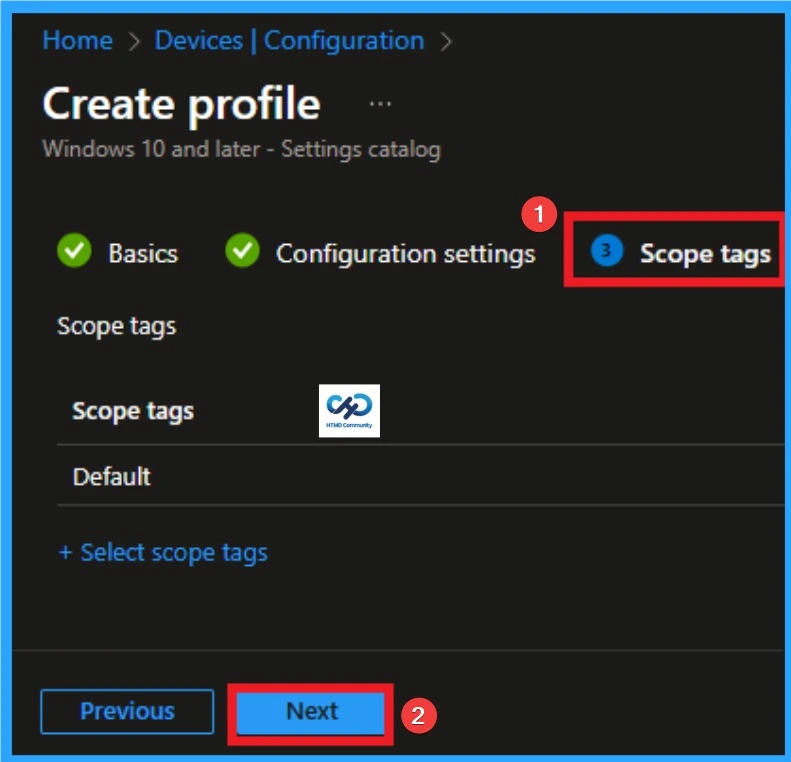
Scope Tags
The next section is the Scope tag and which is not a compulsory step. It helps to assign this policy to a defined group of users or devices. Here, I skip the section and click on the next button.
Assignments Tab
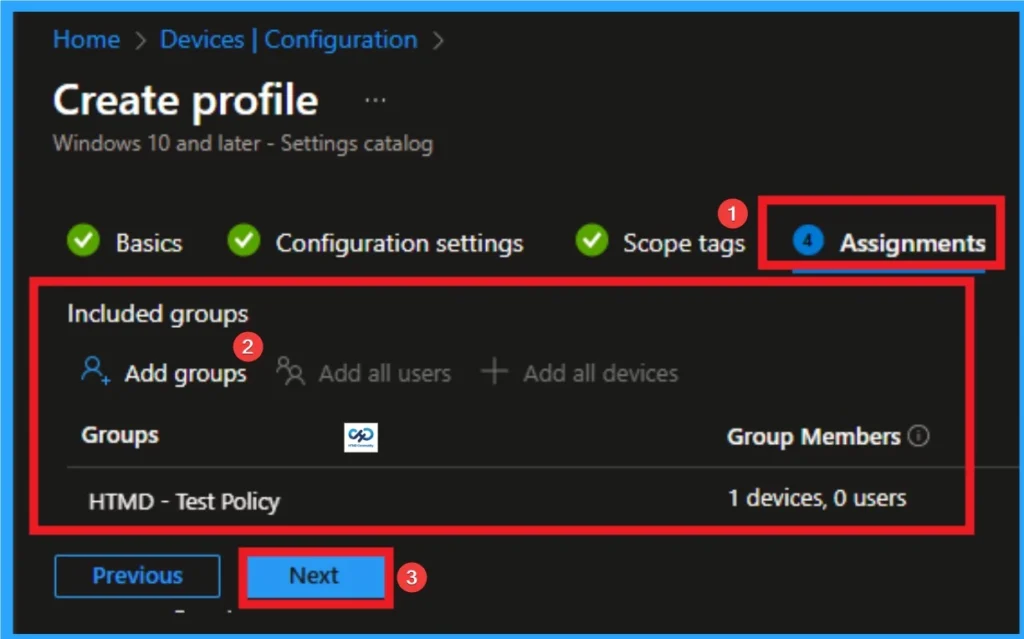
The assignments tab is the crucial step that determines which groups can be selected to assign the policy. Click on the +Add groups option under included groups. Select the group from the list of groups on your tenant.
Click on the Select button. And you can see the selected group on the Assignments tab. Click on the Next button in the window below.
Review + Create
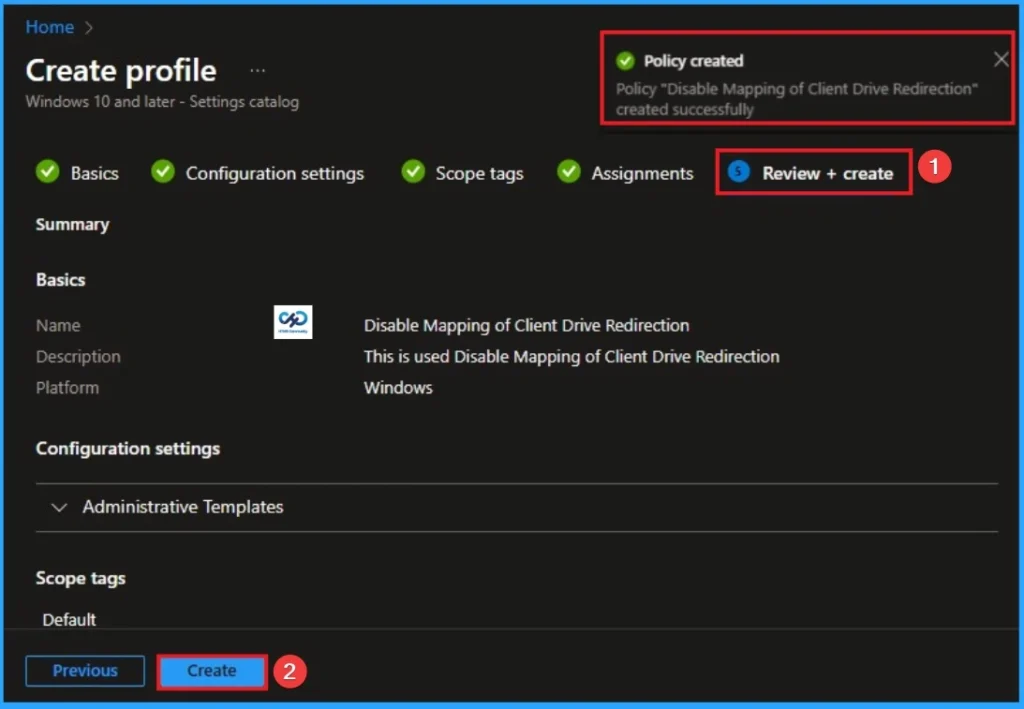
The Review + Create tab is the last step of policy creation. On this tab, you can verify every detail of the policy which are added in the previous steps (basic configuration settings, scope tag assignments s etc). If you want to make any changes, click on the previous button; otherwise, you can click on the Create button.
Monitoring Status
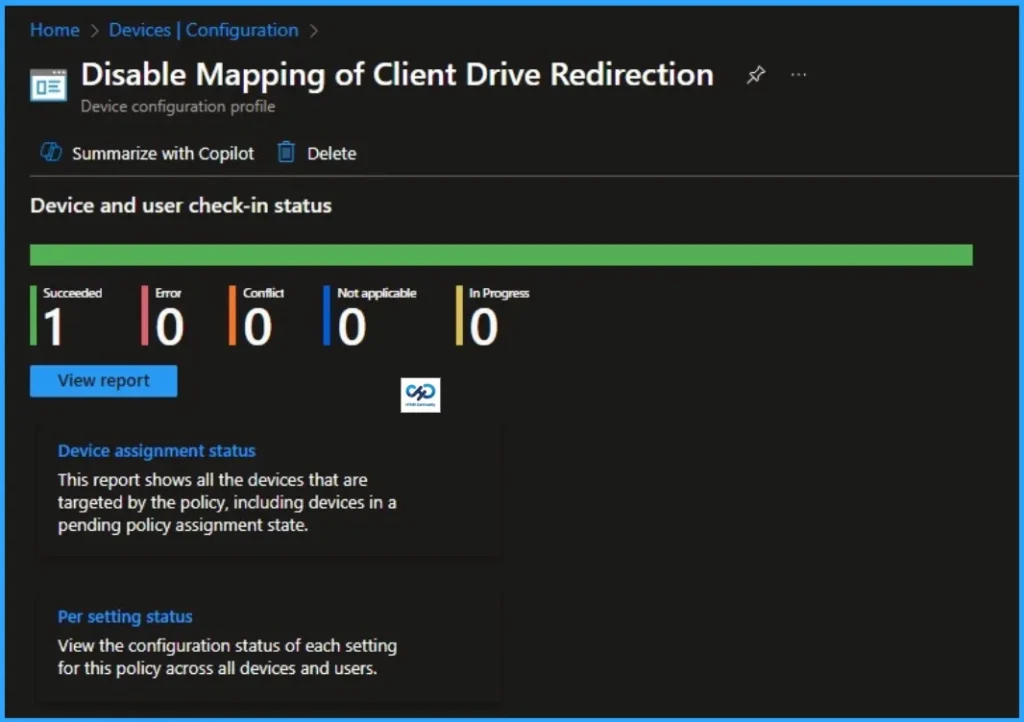
When the policy is created successfully, you can sync the device on the Company portal for faster deployment. After syncing is completed, you can check the status on the Intune Portal. Go to Devices > Configuration and search for the policy.
How to Remove Client Drive Redirection Policy
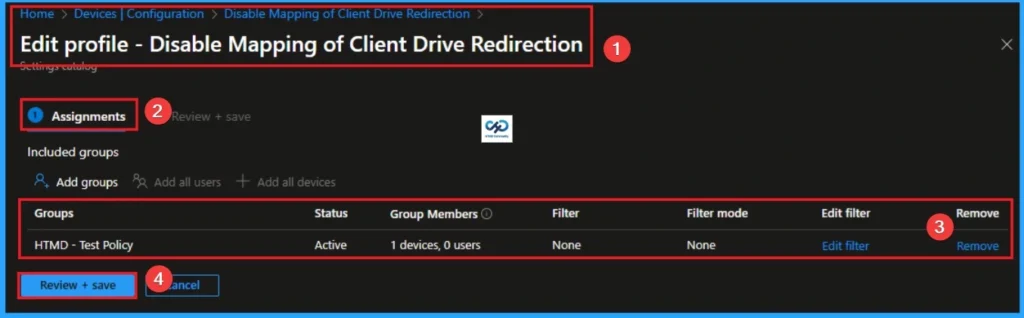
If you want to remove the Block All Consumer Microsoft Account User Authentication policy on the Intune portal, it is a very easy process. To do this, open the policy from the Configuration tab., and click on the Edit button on the Assignment tab. Click on the Remove button on this section to remove the policy.
For more detailed information, you can check our previous post – Learn How to Delete or Remove App Assignment from Intune using by Step-by-Step Guide.
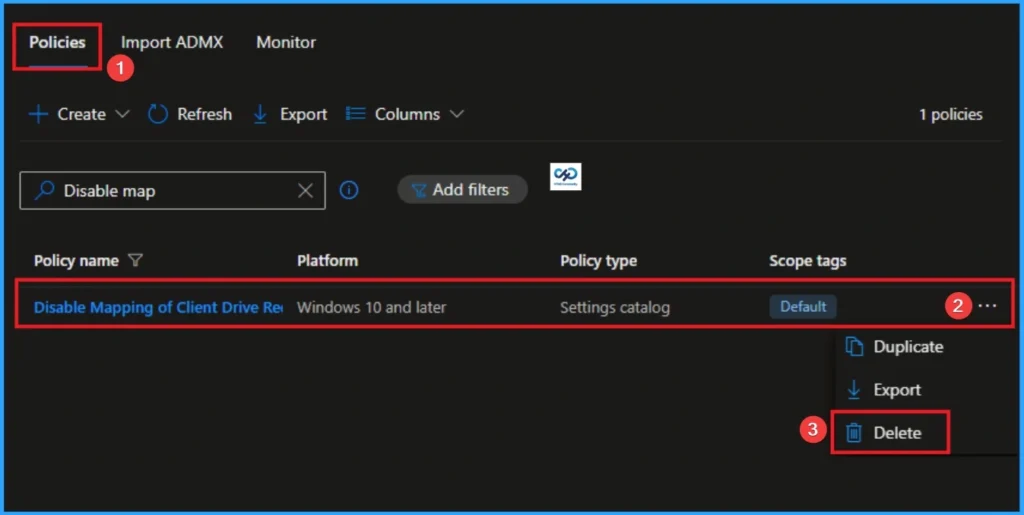
How to Delete Client Drive Redirection
Intune allows you to easily delete a policy within the Intune Portal. Policy deletion is necessary in an organization due to different reasons. To delete the policy, click on the 3-dot option and then click on the Delete button.
For more information, you can refer to our previous post – How to Delete Allow Clipboard History Policy in Intune Step by Step Guide.
Need Further Assistance or Have Technical Questions?
Join the LinkedIn Page and Telegram group to get the step-by-step guides and news updates. Join our Meetup Page to participate in User group meetings. Also, Join the WhatsApp Community to get the latest news on Microsoft Technologies. We are there on Reddit as well.
Author
Anoop C Nair has been Microsoft MVP for 10 consecutive years from 2015 onwards. He is a Workplace Solution Architect with more than 22+ years of experience in Workplace technologies. He is a Blogger, Speaker, and Local User Group Community leader. His primary focus is on Device Management technologies like SCCM and Intune. He writes about technologies like Intune, SCCM, Windows, Cloud PC, Windows, Entra, Microsoft Security, Career, etc