
Hey, let’s discuss about Protecting Apple Users from Personalized Ad Tracking Risks using Intune. Apple collects data to show personalized advertisements to its users. These ads are based on user interests and behavior on Apple devices. A special identifier is used to track what users like. This helps advertisers target the right audience.
This advertising system requires detailed information from each user. Apple collects data such as apps used, searches, and preferences. All this information is connected to build a strong user profile. This profile helps deliver more accurate ads.
Advertisers find this data very valuable. It helps them create ads that users are more likely to click. More clicks mean more business for the advertisers. So, they depend heavily on user data.
However, the data collected is also attractive to attackers. Hackers may try to access this information for illegal use. Even if the identifier is anonymous, combining it with other data can reveal a user’s identity. This creates a privacy risk for users.

Table of Contents
Protecting Apple Users from Personalized Ad Tracking Risks using Intune
Users may not always understand how much information is being tracked. It is important to protect user privacy. Apple and organizations must take strong steps to secure this data. Users should also be aware of privacy settings on their devices.
- Allow or Block Bluetooth Advertising Policy using Intune
- Turn off Advertising ID Using Intune
- How Intune Helps Safeguard iOS Privacy by Limiting Ad Tracking
How this Helps Supervised Devices
Supervised devices give organizations more control over user data and privacy settings. They can turn off personalized ads and stop tracking through the advertising ID. This keeps sensitive information safe from attackers and advertisers. It helps protect the identity of users in a managed environment.
Create a Profile
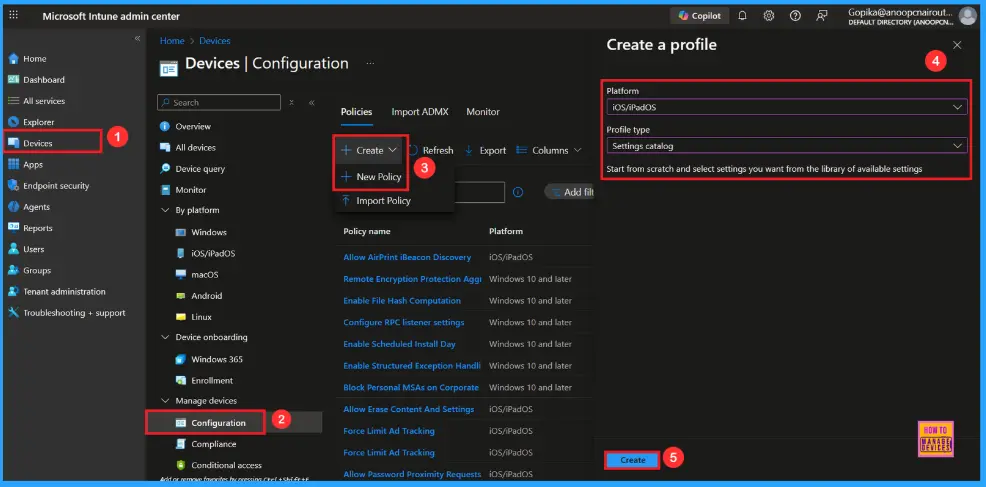
Using simple steps, you can easily complete the policy creation. Open the Intune admin center. Go to Devices > Configuration > Policies> + Create > + New policy. After that, you will get a profile window to select the platform and profile type.
| Steps | Details |
|---|---|
| Platform | iOS/iPadOS |
| Profile Type | Settings Catalog |
Protecting Apple Users from Personalized Ad Tracking Risks using Intune – Table 1
Basic Step
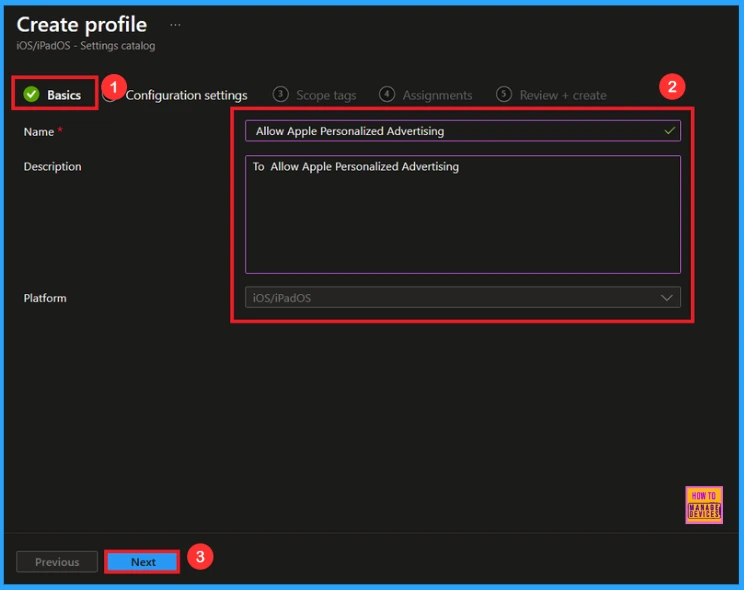
You need to enter some basic details, such as the name and a description. For example, I entered the name as Allow Apple Personalized Advertising. In the description, I enter To Allow Apple Personalized Advertising. After filling in the details, click Next to continue.
Configuration Settings
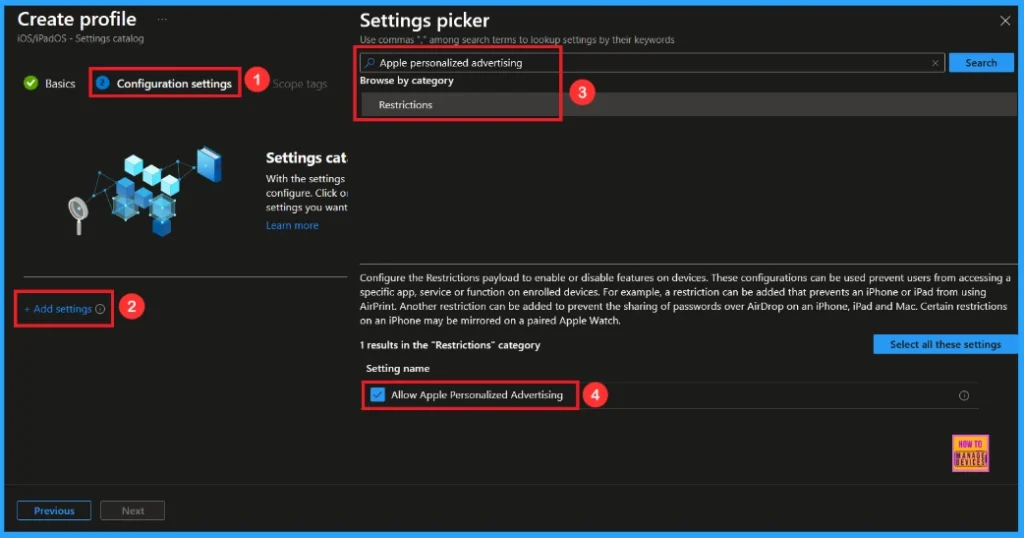
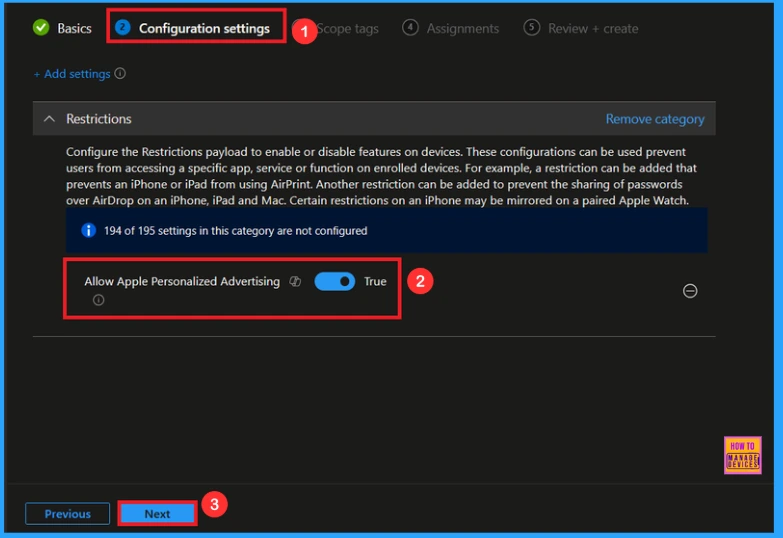
On this page, we click on the + Add Settings hyperlink. Then you will get a settings picker that will show different types of categories to select specific settings. Here, I choose to Restrictions the category and select the Allow Apple Personalized Advertising.
Once you have selected this settings and closed the Settings picker. You will see it on the Configuration page. Here we have only two settings: Allow or Block. By default, Apple Personalized Advertising will be set to Allow. If you want to allow these settings, click on the Next button.
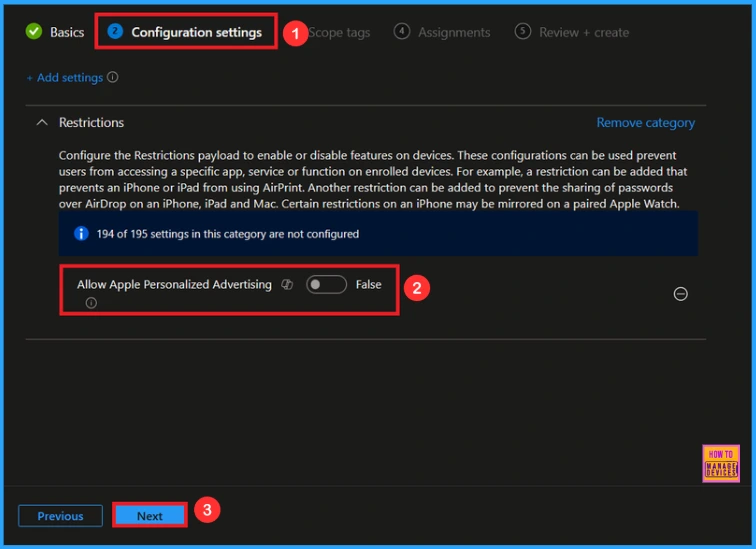
Block Apple Personalized Advertising
If we block this policy, you can block the Apple Personalized Advertising by toggling the switch. After reviewing or adding more settings, you can click the Next button to continue.
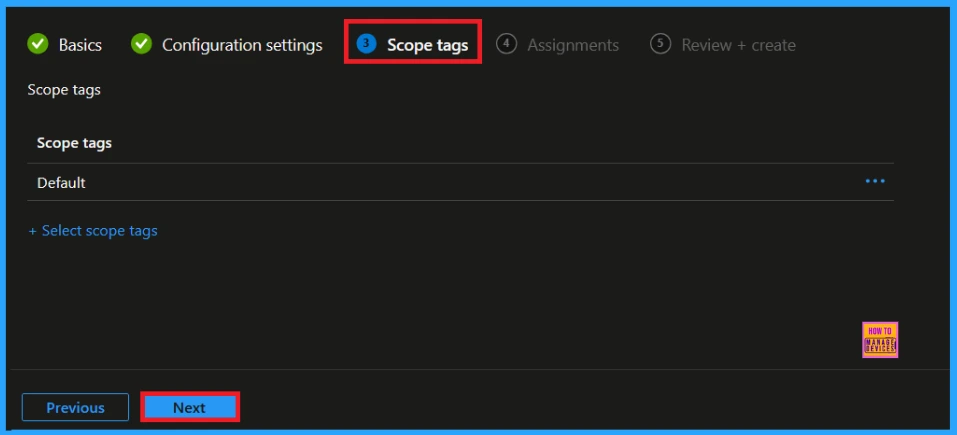
Scope Tags
A Scope Tag in Intune is used to control visibility and access to Intune resources based on administrative roles. Scope tags are not mandatory. You can add the scope tag using the Select scope tags button. Click the Next button to proceed.
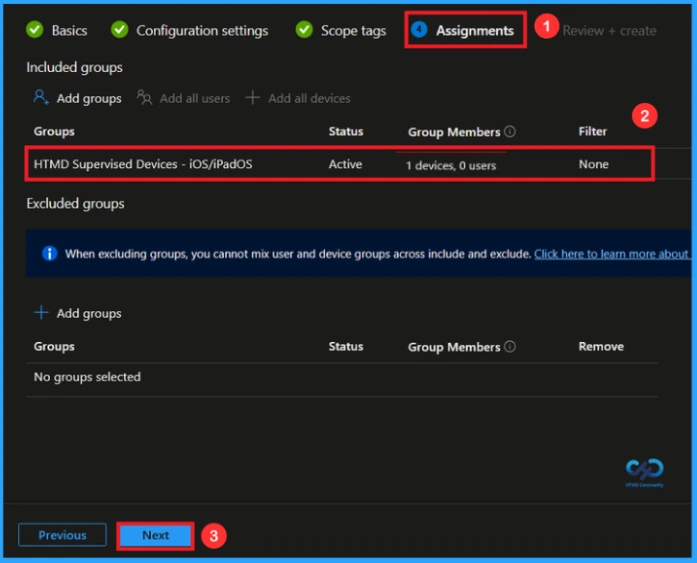
Assignments
On the Assignments tab, we can select which users or devices get this policy. Under Include Groups, click Add Groups. From the list, select the group that we want to target (e.g HTMD Supervised Devices – iOS/iPadOS). Then click the Next button.
Final Step
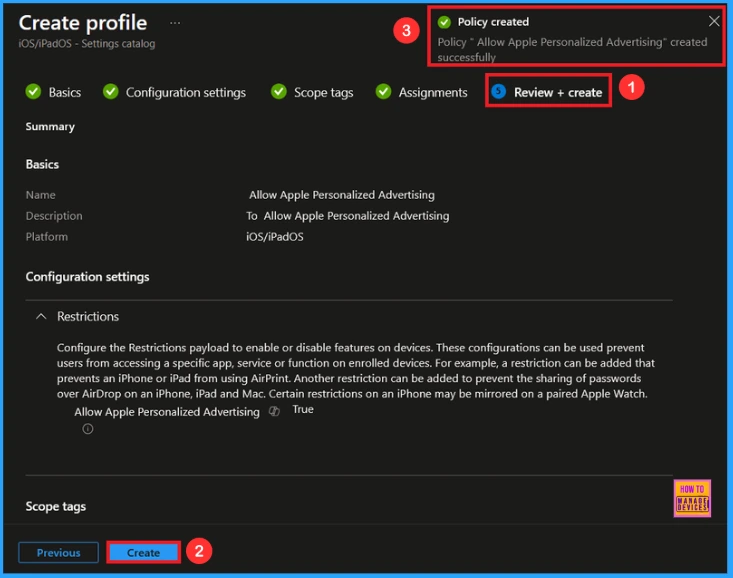
At the final Review + Create step, we see a summary of all configured settings for the new profile; after reviewing the details and making any necessary changes by clicking Previous. We click Create to finish, and a notification confirms that the “Allow Apple Personalized Advertising created successfully”.
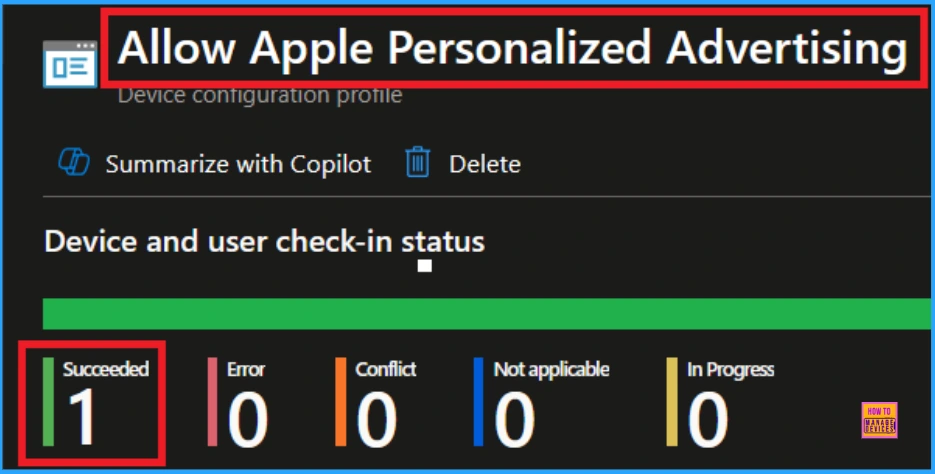
Device and User Check-in Status
We can check a policy’s status in the Intune Portal. Generally, it takes about 8 hours for policies to be created. Use the manual sync option to reduce the configuration delay in the Company Portal app on the device, then check the status again. Navigate to Devices> Configuration and Click on the specific policy.
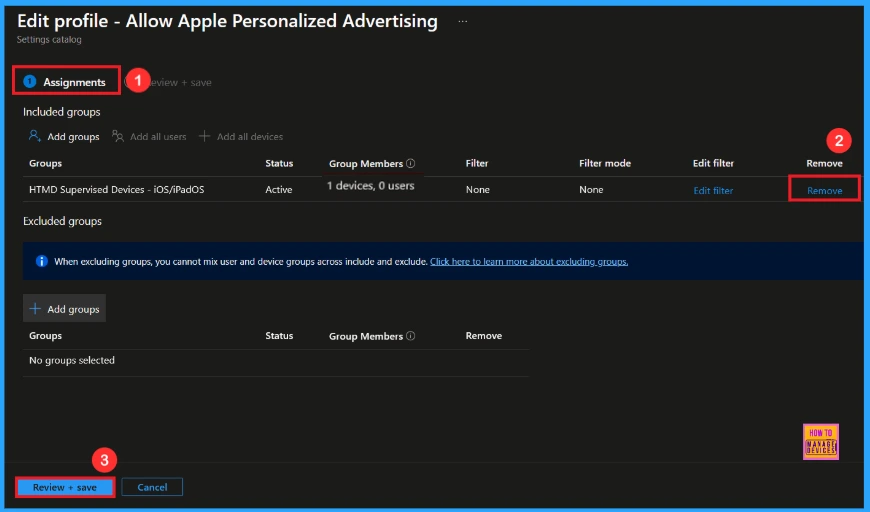
How to Remove Assigned Group from this Policy
Sometimes, we need to remove a group from a policy assignment for security updates. Open the policy from the Configuration tab and click on the Edit button on the Assignment tab. Click on the Remove button on this section to remove the policy. Click Review + Save after making the change.
For detailed information, you can refer to our previous post – Learn How to Delete or Remove App Assignment from Intune using by Step-by-Step Guide.
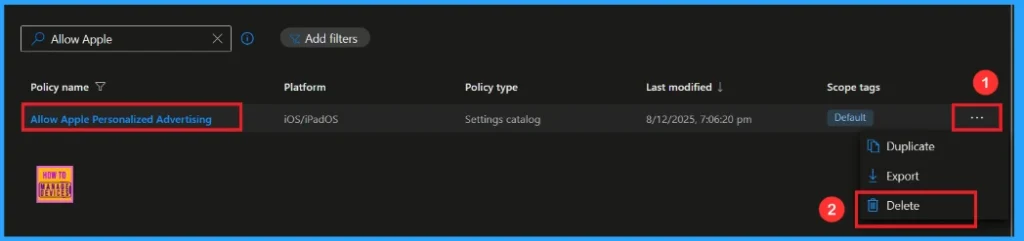
How to Delete this Policy from Intune
To delete an Intune policy for security or operational reasons. It is simple to do. I will demonstrate how to delete an Intune policy through the Allow Apple Personalized Advertising Policy. Click the three dots, then click the Delete option.
How to Check on End User Device
Users can check their advertising settings by opening Settings on their Apple device. Then they go to Privacy & Security and tap Apple Advertising. They can see if personalized ads are turned on or off. From there, they can change the setting to protect their privacy.
Need Further Assistance or Have Technical Questions?
Join the LinkedIn Page and Telegram group to get the latest step-by-step guides and news updates. Join our Meetup Page to participate in User group meetings. Also, Join the WhatsApp Community to get the latest news on Microsoft Technologies. We are there on Reddit as well.
Author
Anoop C Nair has been Microsoft MVP from 2015 onwards for 10 consecutive years! He is a Workplace Solution Architect with more than 22+ years of experience in Workplace technologies. He is also a Blogger, Speaker, and Local User Group Community leader. His primary focus is on Device Management technologies like SCCM and Intune. He writes about technologies like Intune, SCCM, Windows, Cloud PC, Windows, Entra, Microsoft Security, Career, etc.