
Key Takeaways
- Stops apps from other devices installing automatically.
- Helps save storage space.
- Doesn’t stop updates for apps you already have.
- Works on supervised devices (iOS 9+).
Hey, let’s discuss about How to Stop Automatic App Downloads on iOS Devices using Intune. When this setting is turned off, your device will no longer automatically download apps that you purchase or download on other Apple devices using the same Apple ID. Go to Settings > App Store > Automatic Downloads and toggle off App Downloads. This stops apps from other Apple devices (like iPad) from auto-installing.
Table of Contents
Table of Contents
How to Stop Automatic App Downloads on iOS Devices using Intune
However, this setting does not impact updates for apps that are already installed on the device. Existing apps can still update automatically if automatic updates are enabled. The feature requires a supervised device (typically managed by an organization) and is available on devices running iOS 9 or later.
- Download and Install Surface App for Microsoft Surface PCs
- Download Mobile App Diagnostics in Intune Admin Portal
- Download Windows Program Install Uninstall Troubleshooter | Fix Apps Problems
How to Create a Policy
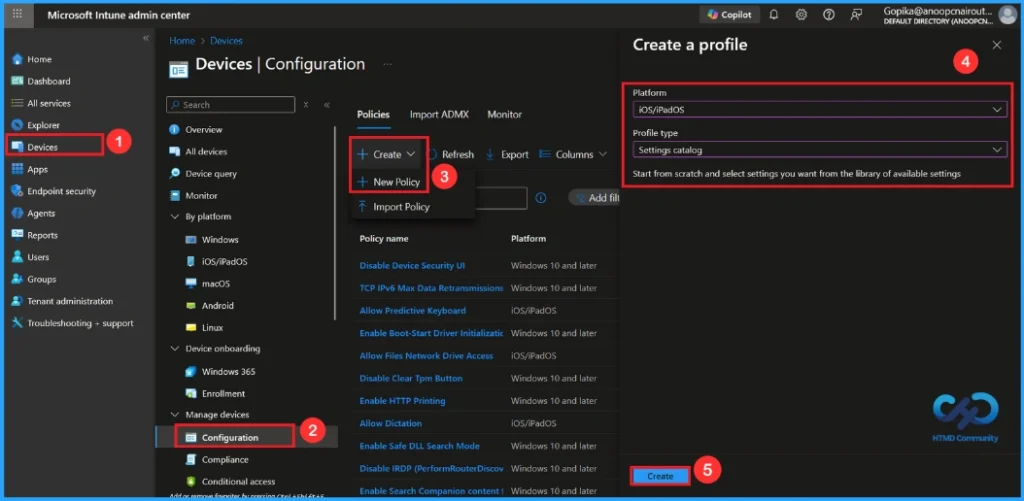
To deploy a policy for iOS or iPadOS devices, first sign in to the Microsoft Intune admin center. Go to Devices and select Configuration profiles. Then click Create profile to open the profile creation window. Under Platform, choose iOS/iPadOS, and for the Profile type, select Settings catalog. After that, click Create to begin configuring your new policy.
Basic Step of Policy Creation
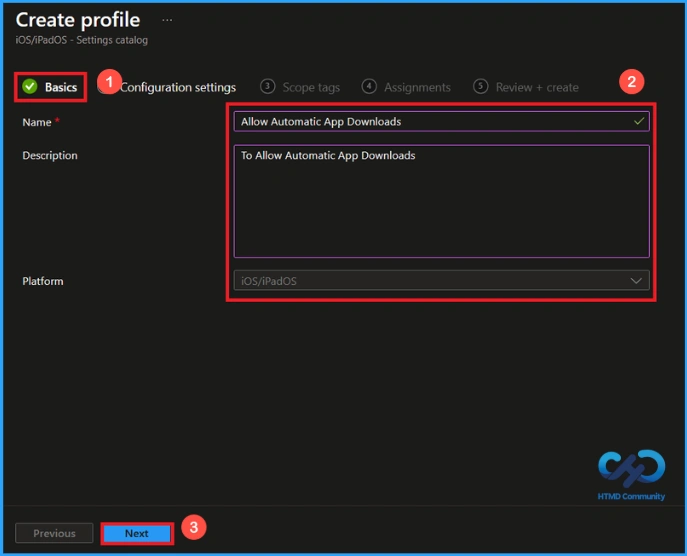
After this, you will be directed to the Basics tab. In this section, you need to provide a name(Allow Automatic App Downloads) and description(To Allow Automatic App Downloads) for the policy to clearly identify its purpose. Click Next to continue.

Configure App Download Policy
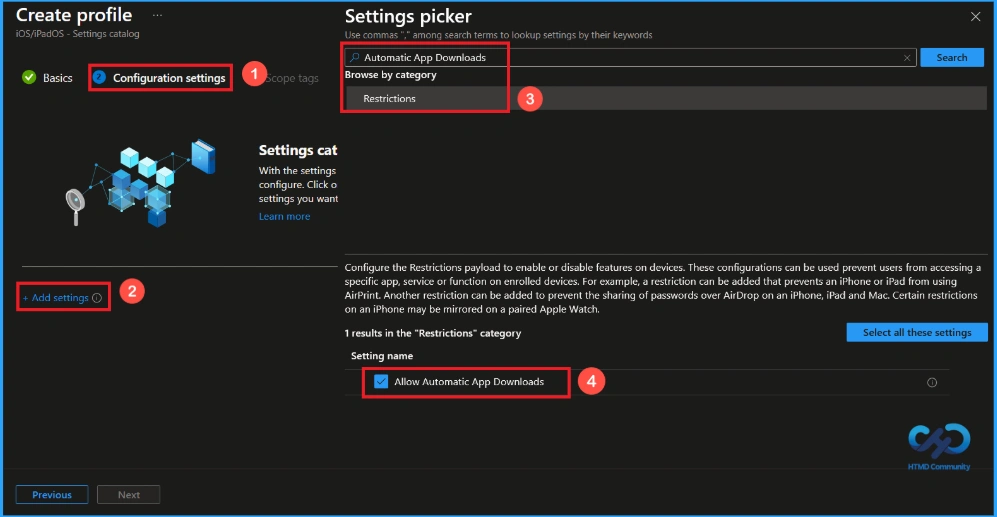
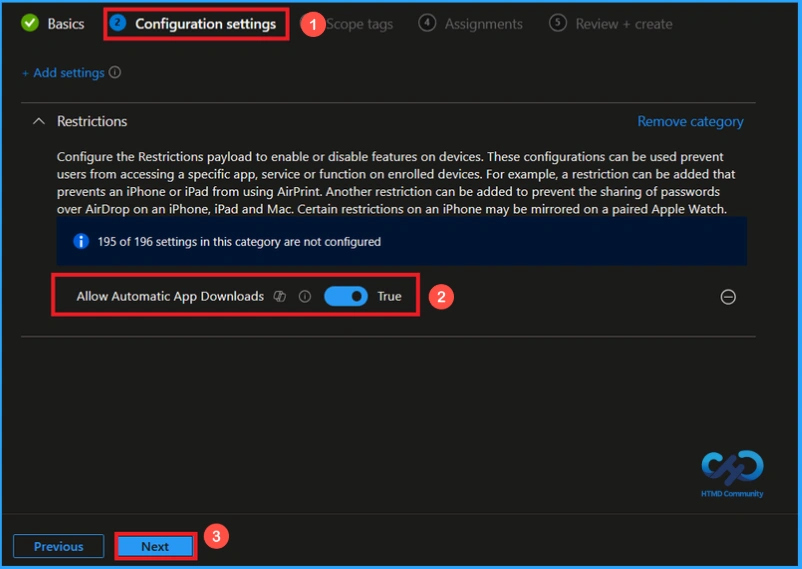
Next, you will be in the Configuration settings tab. In this section, click on Add settings to open the settings picker window. In the search bar, type Automatic App Download or select the Restrictions category from the list. Then, select the Allow Automatic App Download policy.
Once you have selected this policy and closed the Settings picker. You will see it on the Configuration page. Here we have only two settings True or False. By default, it will be set to True. If you want to allow these settings, click on the Next button.
Block Automatic App Download Policy
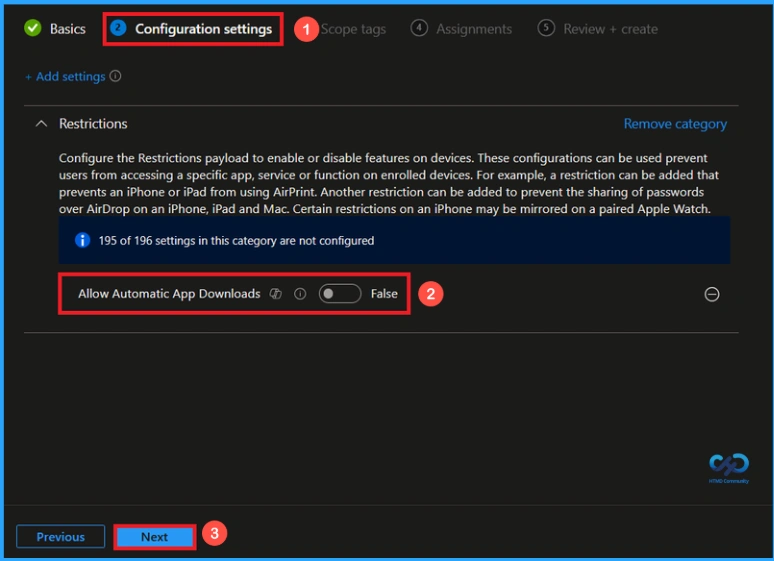
If we blocked or not configure this policy, you can disable the Automatic App Download policy by toggling the switch from right to left. Then you can click the Next button to proceed.
What is Scope Tag
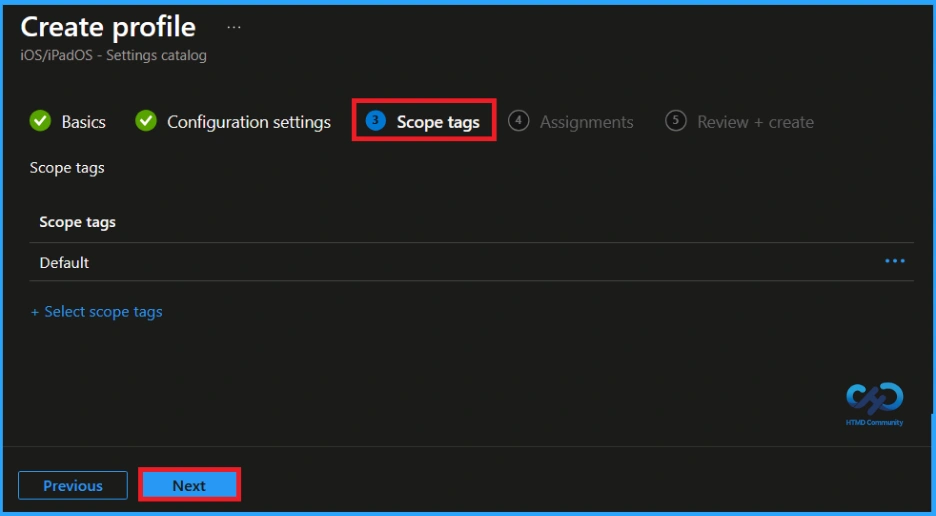
After configuring the settings, click Next. You will then reach the Scope Tag section. Scope tags help you organize and filter policies based on departments, locations, or roles. They make it easier to manage and assign policies to the right groups. If you want to add a scope tag for your policy, you can easily do that. Once done, click Next to continue further.
Assignments Tab
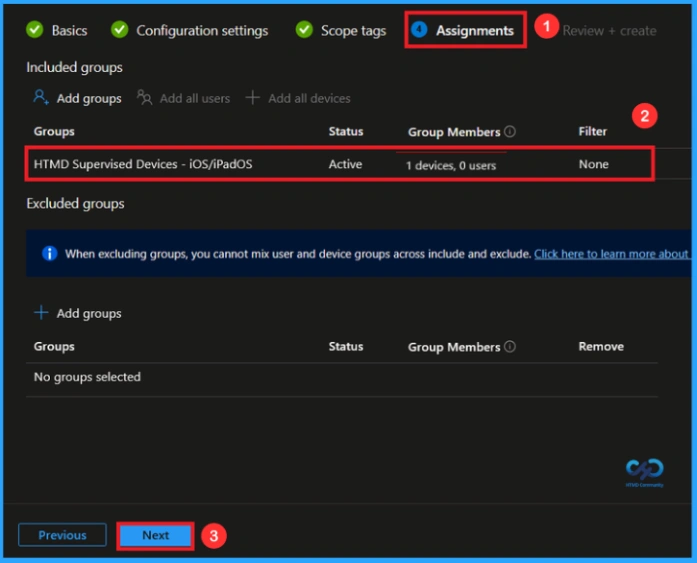
After the Scope Tags, you will reach the Assignment section. In this section, you can assign the policy to specific groups. Assignments ensure that the policy is applied only to the devices or users, helping maintain control and compliance. To assign a group, click Add Group and select group ( HTMD Supervised Devices – iOS iPadOS) then click Next to continue.
Final Step of Policy Creation
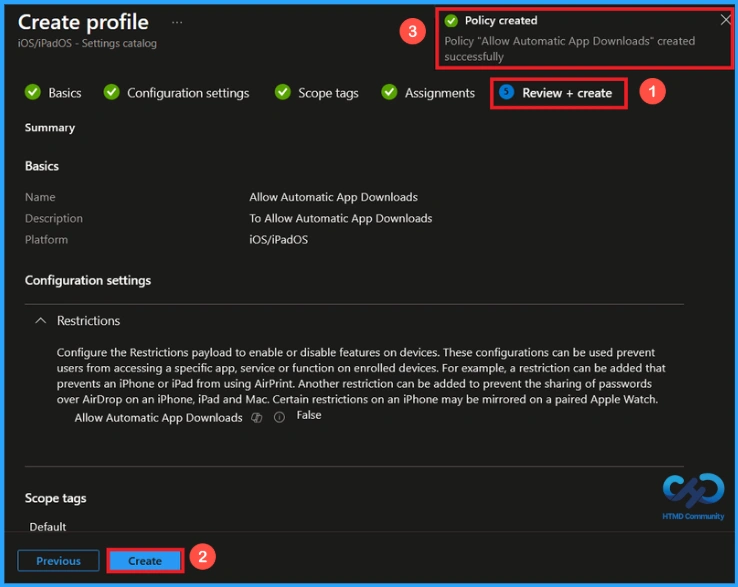
After Assignments, you will reach the Review + Create page. Here, you can review all the information and settings you have entered. If everything looks correct, click Create to proceed. If you need to make any changes, you can go back to the previous tabs and edit the configurations. Once you click Create, the policy will be successfully created.
Monitoring Status After Policy Creation
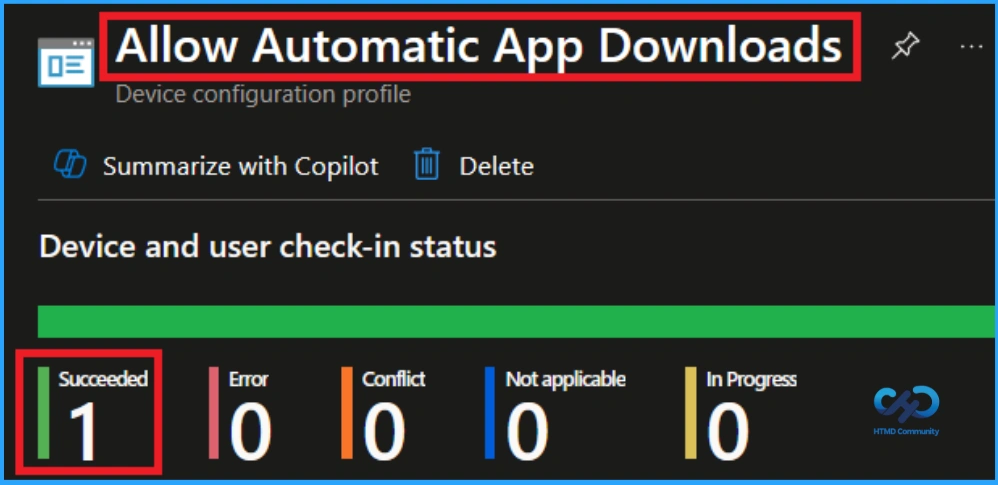
When the policy is created successfully, you can sync the device on the Company portal for faster deployment. After syncing is completed, you can check the status on the Intune Portal. Go to Devices > Configuration and search for the policy.
How to Remove Assigned Group from Automatic App Download Policy
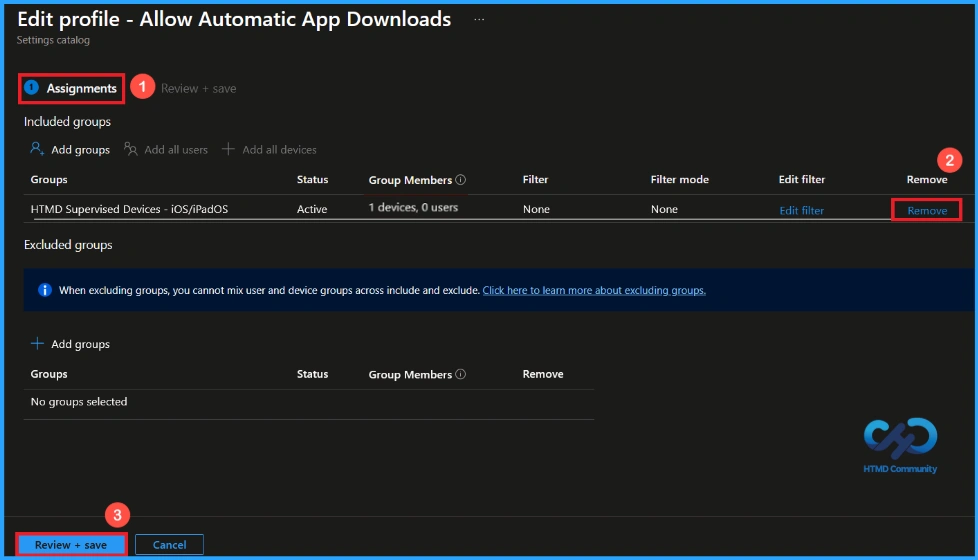
After creating the policy, if you want to remove the specific group that you previously selected, you can easily do that. First, go to Devices > Configuration policies. In the Configuration policy section, search and select the policy. In the Assignment section, you will find an Edit option and click on it. Then, click the Remove option.
For detailed information, you can refer to our previous post – Learn How to Delete or Remove App Assignment from Intune using by Step-by-Step Guide.
How to Delete Automatic App Download Policy from Intune
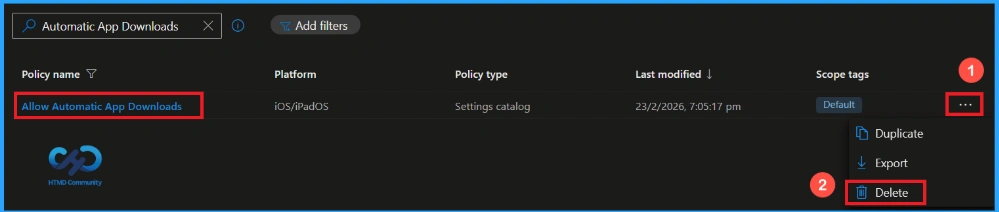
If you want to delete this policy for any reason, you can easily do so. First, search for the policy name in the configuration section. When you find the policy name, you will see a 3-dot menu next to it. Click on the 3 dots, then click the Delete button.
For detailed information, you can refer to our previous post – How to Delete Allow Clipboard History Policy in Intune Step by Step Guide.
Need Further Assistance or Have Technical Questions?
Join the LinkedIn Page and Telegram group to get the step-by-step guides and news updates. Join our Meetup Page to participate in User group meetings. Also, Join the WhatsApp Community and WhatsApp Channel to get the latest news on Microsoft Technologies. We are there on Reddit as well.
Author
Anoop C Nair has been Microsoft MVP for 10 consecutive years from 2015 onwards. He is a Workplace Solution Architect with more than 22+ years of experience in Workplace technologies. He is a Blogger, Speaker, and Local User Group Community leader. His primary focus is on Device Management technologies like SCCM and Intune. He writes about technologies like Intune, SCCM, Windows, Cloud PC, Windows, Entra, Microsoft Security, Career, etc.