
Key Takeaways
- October 2026 KB5127694 .NET Framework Update
- Released on October 13, 2026, for Windows 11 version 26H2.
- Applies to .NET Framework 3.5 and 4.8.1.
- Addresses 20 CVEs, including denial-of-service, elevation-of-privilege, spoofing, and remote-code-execution vulnerabilities.
- Includes cumulative security and reliability improvements for supported .NET Framework components.
- Microsoft recommends installing the update as part of regular maintenance.
- Review the prerequisites and restart requirements before installation.
Installing KB5127694 helps protect Windows 11 version 26H2 devices against known security vulnerabilities in .NET Framework 3.5 and 4.8.1. This cumulative update includes security and reliability improvements, helping reduce security risks for applications that rely on these frameworks. Microsoft recommends installing the update as part of regular maintenance to keep systems secure and reliable.
Table of Content
Table of Contents
October 2026 KB5127694: High-Severity .NET Framework Security Update Fixes 18 CVEs on Windows 11 26H2
To install KB5127694, the device must have .NET Framework 3.5 or 4.8.1 installed. The update includes a downloadable CSV file containing information about the files provided. A computer restart may be required if any affected files are in use after installation. Microsoft recommends closing all .NET Framework-based applications before applying the update to ensure a smooth installation.
| Security improvements | Details |
|---|---|
| CVE-2026-58280 – .NET Framework Denial of Service vulnerability | This security update addresses a denial of service vulnerability detailed in CVE-2026-58280. |
| CVE-2026-62886 – .NET Framework Elevation of Privilege vulnerability | This security update addresses an elevation of privilege vulnerability detailed in CVE-2026-62886. |
| CVE-2026-69439 – .NET Framework Elevation of Privilege vulnerability | This security update addresses an elevation of privilege vulnerability detailed in CVE-2026-69439. |
| CVE-2026-69651 – .NET Framework Denial of Service vulnerability | This security update addresses a denial of service vulnerability detailed in CVE-2026-69651. |
| CVE-2026-70007 – .NET Framework Remote Code Execution vulnerability | This security update addresses a remote code execution vulnerability detailed in CVE-2026-70007. |
| CVE-2026-70035 – .NET Framework Remote Code Execution vulnerability | This security update addresses a remote code execution vulnerability detailed in CVE-2026-70035. |
| CVE-2026-70174 – .NET Framework Remote Code Execution vulnerability | This security update addresses a remote code execution vulnerability detailed in CVE-2026-70174. |
| CVE-2026-83520 – .NET Framework Remote Code Execution vulnerability | This security update addresses a remote code execution vulnerability detailed in CVE-2026-83520. |
| CVE-2026-84008 – .NET Framework Denial of Service vulnerability | This security update addresses a denial of service vulnerability detailed in CVE-2026-84008. |
| CVE-2026-85363 – .NET Framework Elevation of Privilege vulnerability | This security update addresses an elevation of privilege vulnerability detailed in CVE-2026-85363. |
| CVE-2026-87697 – .NET Framework Remote Code Execution vulnerability | This security update addresses a remote code execution vulnerability detailed in CVE-2026-87697. |
| CVE-2026-96222 – .NET Framework Spoofing vulnerability | This security update addresses a spoofing vulnerability detailed in CVE-2026-96222. |
| CVE-2026-96224 – .NET Framework Remote Code Execution vulnerability | This security update addresses a remote code execution vulnerability detailed in CVE-2026-96224. |
| CVE-2026-96233 – .NET Framework Denial of Service vulnerability | This security update addresses a denial of service vulnerability detailed in CVE-2026-96233. |
| CVE-2026-96958 – .NET Framework Denial of Service vulnerability | This security update addresses a denial of service vulnerability detailed in CVE-2026-96958. |
| CVE-2026-96959 – .NET Framework Denial of Service vulnerability | This security update addresses a denial of service vulnerability detailed in CVE-2026-96959. |
| CVE-2026-96960 – .NET Framework Denial of Service vulnerability | This security update addresses a denial of service vulnerability detailed in CVE-2026-96960. |
| CVE-2026-97788 – .NET Framework Information Disclosure vulnerability | This security update addresses an information disclosure vulnerability detailed in CVE-2026-97788. |
| CVE-2026-97801 – .NET Framework Tampering vulnerability | This security update addresses a tampering vulnerability detailed in CVE-2026-97801. |
| CVE-2026-108398 – .NET Framework Mitigation Bypass vulnerability | This security update addresses a mitigation bypass vulnerability detailed in CVE-2026-108398. |
- Windows 11 26H2 Security Baseline in Microsoft Intune for Enhanced Security and Best Practices
- Create a New Windows 11 26H2 Cloud PC using Intune
- Deploy the Windows 11 26H2 Feature Update using Microsoft Intune
How to Install KB5127694 for Windows 11 26H2
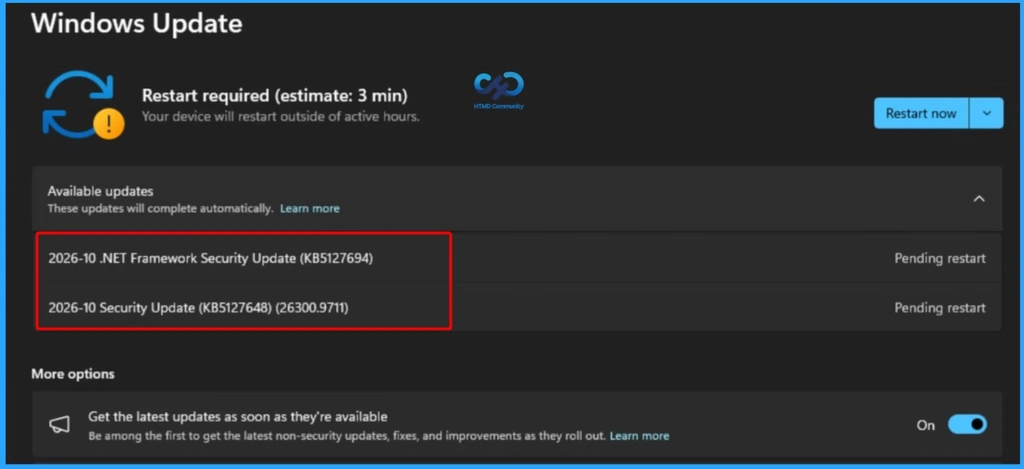
KB5127694 is available through multiple update channels, including Windows Update, Windows Update for Business, Microsoft Update Catalog, and Windows Server Update Services (WSUS). Depending on your update configuration, the update can be downloaded and installed automatically or obtained as a standalone package.
- Windows Update and Microsoft Update: The update downloads and installs automatically.
- Windows Update for Business: The update is delivered automatically according to your configured update policies.
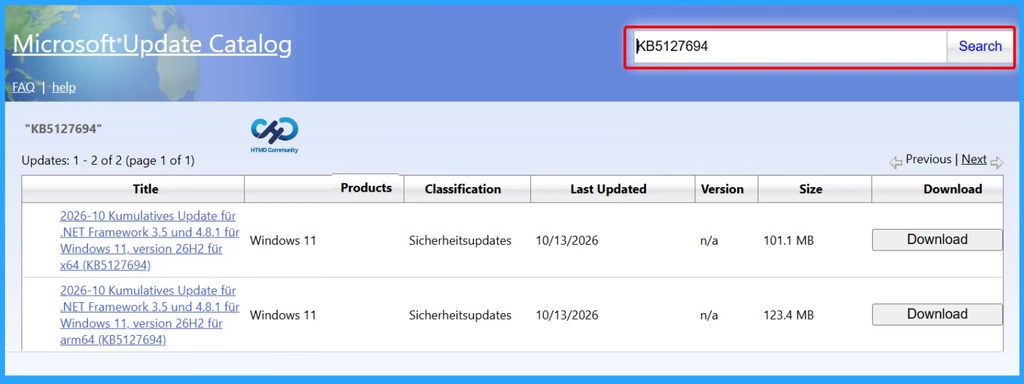
- Microsoft Update Catalog: Download the standalone update package from the
- Microsoft Update Catalog
- Windows Server Update Services (WSUS): The update synchronizes automatically when the following settings are configured:
- Product: Windows 11, version 26H2
- Classification: Security Updates
Need Further Assistance or Have Technical Questions?
Join the LinkedIn Page and Telegram group to get the latest step-by-step guides and news updates. Join our Meetup Page to participate in User group meetings. Also, join the WhatsApp Community and the Whatsapp channel to get the latest news on Microsoft Technologies. We are there on Reddit as well.

Author
Anoop C Nair is Workplace Technology solution architect with 25+ years of experience in global enterprise organizations such as JP Morgan, Capgemini, etc. He is Microsoft Certified Trainer. Microsoft MVP from 2015 onwards for consecutive 11 years! He also conducts Intune and modern workplace tech training for enterprise organizations. He is Blogger, Speaker, and Founder of HTMD Community and HTMD Conference. His focus is on Device Management technologies such as Intune, Windows, Cloud PC. He writes about technologies like Intune, SCCM, Windows, Cloud PC, Windows, Entra, Microsoft Security.